
Your patio isn’t just a place to toss some chairs and call it done. Modern patio design has evolved far beyond basic concrete slabs and mismatched furniture. Today’s homeowners are creating outdoor rooms that feel like natural extensions of their homes, places that work as hard as they entertain. Whether you’re starting from scratch or refreshing an existing space, modern patio ideas focus on smart materials, thoughtful layouts, and functional beauty. The good news? You don’t need a massive budget or a contractor’s crew to pull off a contemporary look. This guide walks through seven practical strategies to transform your outdoor space into something genuinely worth spending time in.
Table of Contents
ToggleKey Takeaways
- Modern patio ideas prioritize functional materials like composite decking and porcelain pavers that require minimal maintenance while delivering contemporary aesthetics over 10+ years.
- Creating distinct zones for seating, dining, and lounging makes even small patios feel larger and more intentional than cramped, cluttered layouts.
- Strategic lighting combining ambient glow with task lighting transforms a patio into a nighttime destination—stick with warm white (2700K) tones for cozy entertaining spaces.
- Layered greenery through raised planters, container groupings, and vertical gardens softens hard surfaces and adds visual interest without requiring constant upkeep.
- Modern entertaining spaces benefit from designated cooking and dining zones with proper clearances: allow 24–36 inches of workspace depth and 36–48 inches around dining tables for comfortable flow.
- Modern patios blend timeless design with honest functionality—investing in quality foundation materials and purposeful layouts creates outdoor rooms that genuinely enhance how you live outside.
Contemporary Materials and Flooring Options
Composite Decking and Low-Maintenance Surfaces
Modern patios prioritize materials that look sharp and don’t demand constant upkeep. Composite decking, a blend of wood fibers and plastic polymers, delivers the visual warmth of wood without the rot, splinters, or seasonal maintenance. Unlike pressure-treated lumber, composite boards resist weathering, staining, and insect damage. A typical composite board runs $3–$8 per linear foot, roughly double solid wood, but the time you save on sanding and staining pays dividends over 10+ years.
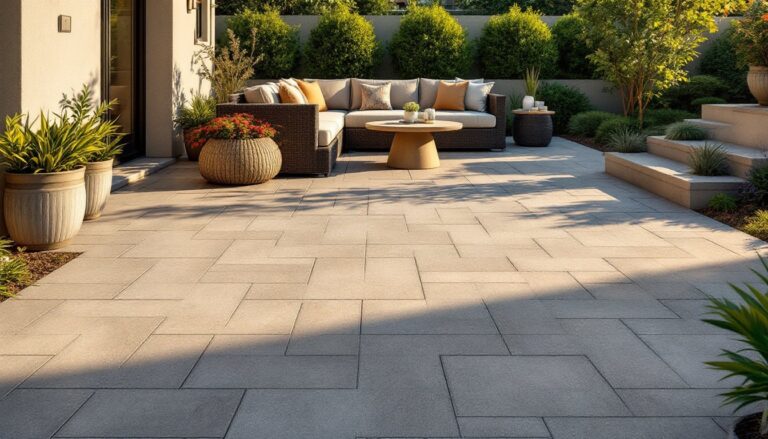
Porcelain pavers are another standout choice for modern patios. These engineered tiles are denser and less porous than natural stone, making them ideal for high-traffic areas. They come in sleek finishes, matte, textured, or polished, and neutral tones (charcoal, light gray, warm concrete gray) that read clean and contemporary. Pavers slip easily over existing concrete with a simple sand-and-level base, so you’re not committing to full demo work.
Polished concrete itself deserves a mention. Sealed and sometimes stained, it’s an industrial-modern staple. It’s durable, affordable, and accepts stain colors from soft grays to deep blacks. The downside? Concrete can crack in freeze-thaw climates, and it requires periodic resealing every 2–3 years. Make sure your slab is at least 4 inches thick (6 inches if you live in a harsh winter zone) and properly sloped for drainage at ¼ inch per foot.
When laying pavers or choosing existing flooring, think about texture and slip resistance. Smooth, polished surfaces look sleek but become slippery when wet. A textured or brushed finish offers grip without sacrificing style. If you’re working with an existing concrete pad, a pressure wash (keep nozzle at least 12 inches away) and a fresh coat of sealer can make a dramatic difference.
Furniture and Layout for Modern Patios
A modern patio layout starts with intention, not clutter. Instead of grouping every piece together, create distinct zones: a seating cluster for conversation, a dining area if space allows, and a lounging nook. This approach makes even a small patio feel larger and more intentional.
Modern furniture typically features clean lines, minimal ornamentation, and either a neutral palette or bold accent colors. Materials matter. Look for pieces crafted from aluminum frames (lightweight, rust-proof) paired with weather-resistant cushions, or solid teak and merbau hardwoods that gray beautifully over time. Avoid pieces labeled “wicker” without specifics, outdoor wicker should be synthetic or resin-woven, not natural reed, which rots quickly. Low-profile seating (arm heights under 30 inches) reinforces that contemporary feel.
Layering furniture styles works, but keep proportions consistent. A modern sectional with geometric throw pillows, a simple metal side table, and a concrete planter create visual rhythm without feeling chaotic. Avoid ornate details and overstuffing. When spacing furniture, allow at least 18–24 inches between seating and a table so people can move comfortably.
For smaller patios, multifunctional pieces earn their spot. A storage bench doubles as seating and a place to stash cushions. A coffee table with a shelf below keeps garden tools or pool supplies hidden. The key is choosing pieces that serve a real purpose rather than just filling square footage.
Lighting Solutions for Ambiance and Function
Lighting transforms a patio from a daytime-only space into a nighttime destination. Modern patio lighting balances ambient glow with task lighting, enough to see what you’re doing without harsh shadows or glare.
String lights (also called bistro or café lights) hang overhead on cables or posts, creating a warm, inviting canopy. Solar-powered versions eliminate wiring headaches, though they’re less bright than hardwired options. If you’re installing permanent lights, 12-volt low-voltage systems are safer and more flexible than standard 120-volt fixtures. They’re also easier to install: a simple transformer plugs into an outdoor outlet, and thin cables run to lights without needing a licensed electrician (though always check local codes).
Recessed deck lights or step lights built into railings or flooring add subtle definition without dominating visuals. These work especially well on composite decking. Wall-mounted sconces or bollard lights (short, vertical posts) punctuate pathways and accent landscaping.
Color temperature matters. Warm white (2700K) feels cozy and residential. Cool white (4000K+) reads sterile in recreational spaces. Stick with warm tones for seating areas and save cooler light for security or task zones. If you’re running new electrical, plan outlets every 6–8 feet along the patio perimeter, future-proofing is cheap now and complicated later. Always use GFCI-protected outlets outdoors. Check your area’s electrical codes: some jurisdictions require permits for outdoor circuits.
Green Elements and Vertical Gardens
Plants soften hard architecture and bring life to concrete and pavers. Modern patios often incorporate greenery strategically, not as an afterthought, but as a design element.
Raised planter beds in steel, composite, or lightweight concrete frames sit neatly along patio edges or screen unsightly views. Build planters from galvanized steel or untreated cedar (untreated cedar weathers beautifully: pressure-treated wood is overkill for planter boxes and contains chemicals). A standard planter bed 24 inches tall, 12 inches deep, and 4 feet long holds enough soil for perennials, ornamental grasses, or small shrubs. Ensure drainage holes and use quality potting soil, garden soil compacts and drains poorly.
Vertical gardens and living walls pack more greenery into tight spaces. Wall-mounted planters, trellises with climbing vines, or modular green wall systems turn blank fences into verdant backdrops. These work especially well on east- or west-facing walls where afternoon shade matters. Just remember: vertical gardens need consistent watering. A drip irrigation system on a timer prevents forgotten plants and water waste.
Container groupings offer flexibility. Cluster three to five pots of varying heights, filled with ornamental grasses, sedums, or dwarf shrubs, near seating or entry points. Large containers (18+ inches diameter) are dramatic focal points. Large pots also retain moisture better than small ones, reducing daily watering. Choose containers in muted tones (charcoal, cream, terracotta) or bold solid colors: busy patterns compete with the plants. Plants like garden design inspiration sources recommend sun exposure requirements carefully, full sun lovers (6+ hours direct light) include coneflowers, Russian sage, and butterfly bush. Part-shade plants (3–4 hours) include hostas, ferns, and coral bells.
Outdoor Kitchen and Entertaining Zones
Modern entertaining isn’t confined to the dining table. An outdoor kitchen, even a simple one, changes how you use a patio.
You don’t need a $10,000 built-in setup. A high-quality grill (charcoal, gas, or hybrid), a side table for prep, and a beverage cooler create a functional cooking zone. If you’re building permanent structures, think modular: stainless steel outdoor cabinets, a mini fridge, and a concrete or tile countertop can be added incrementally. Keep the workspace at least 24 inches deep so someone can turn around with a plate.
Dining arrangements should reflect how you actually entertain. A long, simple wooden or metal table seats groups comfortably. A round table fosters conversation on smaller patios. Benches with backs are more comfortable than standalone chairs and save space. Leave 36–48 inches of clearance on all sides of the table for chair pull-out and foot traffic.
Bar seating around a high counter or ledge creates casual gathering spots. Outdoor bar stools with backs and footrests are more practical than spindle-back versions that wobble on uneven ground. Secure stools are essential, a stiff breeze shouldn’t knock them over.
For entertaining prep, a beverage station, a small cart, shelving unit, or built-in counter, keeps drinks and ice within arm’s reach and off the main dining table. Regional design sources like outdoor entertaining ideas often showcase dedicated zones, emphasizing how zoning improves flow and guest comfort.
Conclusion
Building a modern patio is about merging practicality with style. Start with a solid foundation, good flooring materials, proper drainage, and a clear layout. Layer in durable furniture, thoughtful lighting, and living greenery. Add an entertaining zone if it fits your space and lifestyle. Modern design isn’t fussy or trendy: it’s timeless, functional, and honest about how you actually spend time outside. Whether you’re tackling this as a weekend project or phasing it over a season, the payoff is a space that genuinely enhances your home and draws you outdoors.