
Living in a tiny house doesn’t mean sacrificing a comfortable, functional bedroom. With thoughtful planning and smart design choices, even the smallest bedroom can feel spacious and welcoming. Whether you’re in a true tiny home, a studio apartment, or downsizing to save money and simplify your life, tiny house bedroom ideas can transform a cramped space into a personal retreat. This guide covers proven strategies, from vertical storage and multipurpose furniture to clever color choices and DIY customizations, that help you maximize every square foot while keeping your tiny bedroom organized, bright, and genuinely livable. Let’s explore how to design a bedroom that works as hard as you do.
Table of Contents
ToggleKey Takeaways
- Maximize tiny house bedroom ideas by prioritizing vertical storage solutions like wall-mounted shelves, pegboards, and corner units that keep clutter organized without consuming floor space.
- Choose multipurpose furniture such as platform beds with built-in drawers, wall-mounted desks, and ottoman beds to ensure every piece in a compact bedroom serves double duty.
- Light, neutral wall colors paired with layered lighting (ceiling fixture, reading lamp, and wall sconces) visually expand small spaces and create a warm, inviting atmosphere.
- Use mirrors strategically opposite windows and loft beds beneath high ceilings to visually double your space and add functional sleeping or work areas.
- Embrace minimalist design by applying the one-in-one-out rule, keeping nightstand surfaces clear, and rotating seasonal items to prevent clutter from accumulating in tight quarters.
- DIY projects like floating shelves, pallet wood headboards, and under-bed rolling drawers offer affordable customization while giving you control over your tiny bedroom layout.
Vertical Storage Solutions To Keep Your Tiny Bedroom Organized
The golden rule in tiny house design is simple: go vertical. When floor space is limited, walls are your best friend. Wall-mounted shelving, pegboards, and tall, narrow cabinets draw the eye upward and keep clutter off the ground, making your bedroom feel less cramped.
Install adjustable shelves above your headboard or along one full wall. A 12-inch-deep shelf unit runs floor-to-ceiling and can hold books, decorative boxes, folded clothes, and seasonal items without eating into your sleeping area. Use clear containers or labeled boxes to maintain organization, you’ll see at a glance what you’re storing.
Pegboards are underrated for bedrooms. A 4-by-8-foot pegboard mounted at a comfortable height works beautifully for hanging belts, scarves, hats, or jewelry. Pair it with matching hooks and baskets, and you’ve solved dressing-area storage without a dresser taking up floor space.
Don’t forget corners. A tall corner shelf unit or a tension rod between two walls creates vertical real estate that would otherwise sit empty. Floating shelves are easier to install than traditional cabinets, use a stud finder, locate your wall studs, and mount shelf brackets securely. Each shelf should support at least 25 pounds per foot of length: don’t overload them.
Smart Furniture Choices For Compact Bedroom Spaces
In a tiny bedroom, every piece of furniture must earn its place. Skip the bulky dresser or nightstand and choose pieces that serve double duty. A narrow wall-mounted desk works as a nightstand and a workspace. Floating bedside tables (12 to 18 inches deep) provide a spot for a lamp and your phone without the footprint of a traditional nightstand.
Multipurpose Bed Frames And Underbed Storage
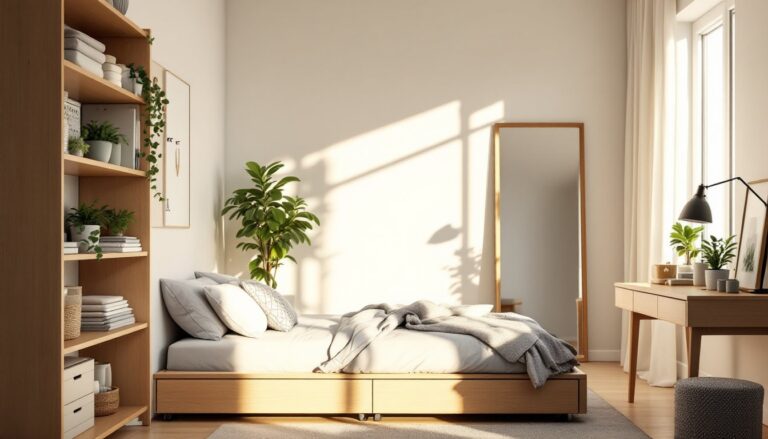
Your bed is the biggest piece in the room, make it work harder. Platform beds with built-in drawers underneath create valuable storage for off-season clothing, bedding, or seasonal decor. Ottoman beds (where the whole frame lifts to reveal storage) are pricier but ingenious for tiny homes.
If your bed frame doesn’t have storage, rolling bins or flat storage containers (often called under-bed organizers) slide easily underneath and hold a surprising amount. A queen-size underbed storage container typically holds 30 to 50 pounds and keeps dust out with a zippered cover.
Consider a loft bed if your ceiling height allows (most code requires at least 7 feet of headroom: check local building codes for minimum underbed clearance). A wooden loft frame, built from 2-by-4 or 2-by-6 studs bolted to studs in your walls, creates a sleeping area and opens up the space below for a desk, seating, or storage. DIY loft builds take time and care: ensure your structure is rock-solid with proper load calculations before climbing into bed.
Color And Lighting Strategies To Expand Visual Space
Color psychology works in tiny bedrooms. Light, neutral walls (soft whites, warm grays, pale blues) reflect light and feel less confining than dark colors. Paint three walls a neutral tone and accent one wall with a subtle pattern or slightly deeper shade, it adds personality without overwhelming the space.
Layered lighting is essential. A single overhead fixture leaves dark corners and can feel harsh. Instead, use a ceiling fixture for general light, a reading lamp by the bed, and a soft wall sconce or fairy lights above your headboard. Dimmable LEDs let you adjust brightness based on mood: they also run cool and save electricity.
Mirrors are magic in small spaces. A large mirror opposite a window reflects natural light and visually doubles the depth of your room. A frameless full-length mirror leaning against a wall takes up almost no floor space. Even a small round mirror above a desk adds brightness.
Choose warm white bulbs (2700K color temperature) in bedrooms, they’re easier on the eyes than cool white and feel more inviting. Consider task lighting too: a clip-on lamp attached to your headboard or a narrow reading light saves space on nightstands.
Decluttering And Minimalist Design For Tiny Bedrooms
A tiny bedroom demands minimalism, whether you embrace it as a philosophy or just out of necessity. Before decorating, ruthlessly cull items you don’t use or love. Ask yourself: Do I wear this? Do I read this? Does this make me happy?
One-in-one-out is a useful rule. When you bring something new into your bedroom, something old leaves. This keeps clutter from creeping back in. Seasonal rotation also helps: store winter clothes in spring, summer clothes in fall. A dedicated under-bed bin or closet shelf holds off-season items.
Keep surfaces clear. A nightstand with just a lamp and one or two items feels calm: a nightstand buried in books, glasses, and random clutter feels stressful. Designate a small basket for daily items (phone charger, journal, pen) and everything else goes in a drawer.
Choose a simple color palette, two or three colors plus neutrals. Too many colors visually fracture a small room. Limit decorative items to things you genuinely love. A few well-chosen pieces (a good print, one plant, a nice throw blanket) create warmth without clutter. Many people find that sites like Apartment Therapy offer realistic small-space inspiration that doesn’t require a budget overhaul.
DIY Projects To Customize Your Tiny Bedroom Layout
Rolling with DIY gives you control and keeps costs down. Building floating shelves is straightforward: locate wall studs with a stud finder, mark shelf bracket positions at the same height, drill pilot holes, and screw in heavy-duty brackets rated for at least 25 to 30 pounds per side. Wooden shelves, solid pine or plywood with a finished edge, can be stained or painted to match your decor.
A headboard adds visual interest and anchors the bed without taking floor space. Pallet wood, reclaimed boards, or even fabric stretched over a plywood frame creates a focal point and can include shelves for nighttime essentials. Modern design sources like Dwell showcase minimalist headboard ideas that work beautifully in compact rooms.
DIY under-bed storage drawers use basic 2-by-6 lumber, caster wheels, and a drill. Build a shallow box that slides on wheels, and you’ve got pull-out storage accessible from the bed’s side without bending. Sand any rough edges and apply a finish (polyurethane or paint) to match your floor or room aesthetic.
Curtain rods and fabric dividers create room-within-a-room zones. A tension rod with blackout curtains separates sleeping from working areas in an open layout. Paint tutorials on platforms like Young House Love often show how accent walls and creative storage solutions transform small rooms affordably.
Before tackling any wall-mounted project, find studs and use proper fasteners. Drywall anchors alone won’t hold heavy shelves: you need screws into studs. Wear safety glasses when drilling overhead, and use a level to ensure everything sits straight.
Conclusion
Tiny house bedroom ideas aren’t about compromise, they’re about intentionality. By pairing vertical storage, multipurpose furniture, smart color choices, and focused DIY projects, you create a bedroom that’s both functional and genuinely restful. Start with one improvement (vertical shelving, better lighting, or a loft bed) and build from there. The goal is a space that fits how you actually live, not an aspirational picture. With these strategies, your tiny bedroom can be your favorite room in the house.